SMALL PRINT / MORE TO DISCOVER
A print with a
story attached.
The finished object is only part of the story. A hidden NFC tag connects it to the video of it being made, photos from the build, and credit to the original designer.
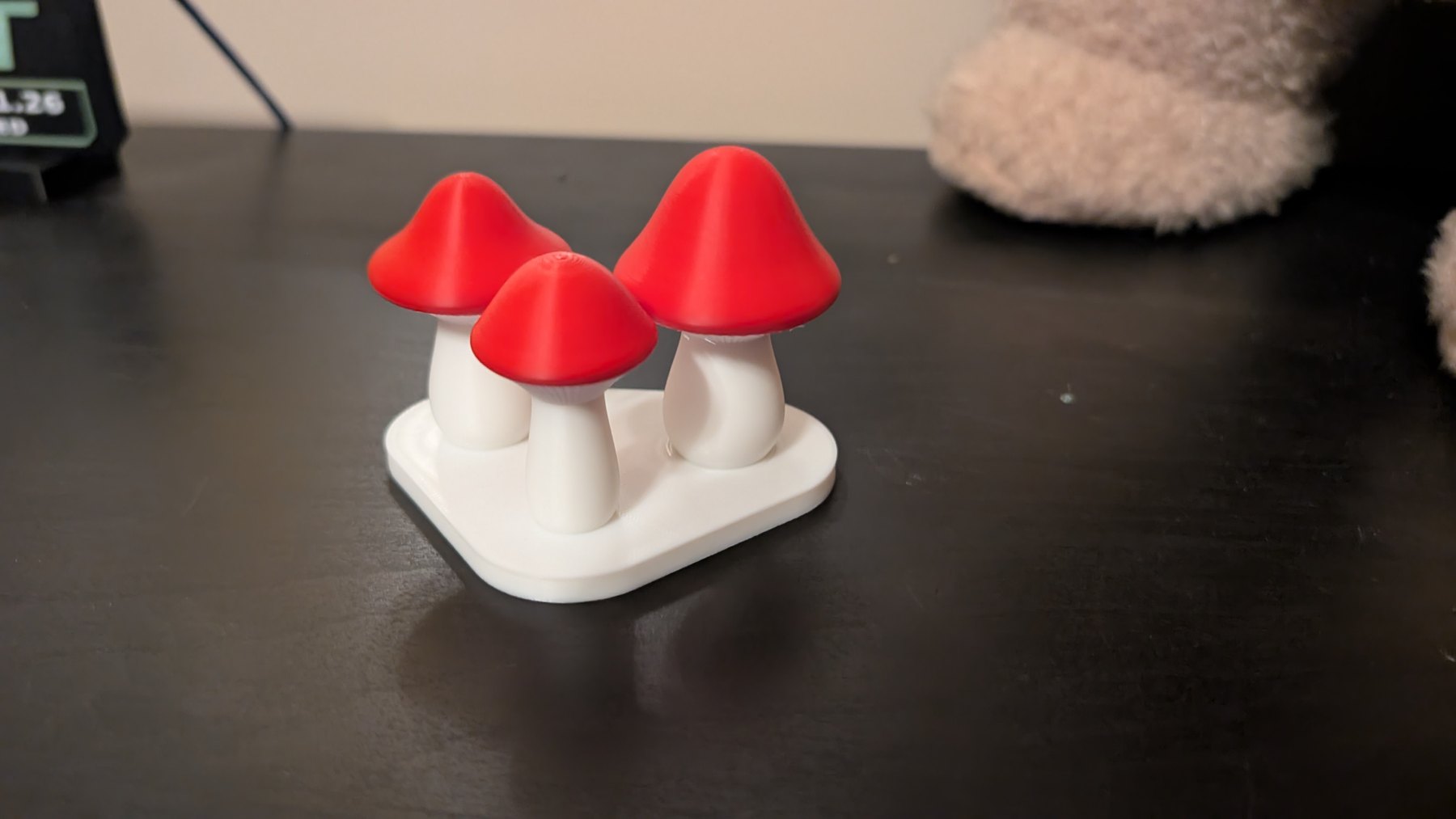
Our first example: Mini Mushroom Trio. The tag is inside the base, and the physical phone tap has been tested. It opens the print’s page as expected.
Explore the print’s story ↗01 / FROM OBJECT TO STORY
Tap the print. Meet its past.
- Bring your phone closeHold a compatible NFC phone near the tag area. On the Mushroom Trio, that’s underneath the base.
- Open the linkFollow the link prompt on your phone. The public print page needs no Spool Shift login.
- Watch it take shapeSee the making-of video, finished photos, and the original design credit.
No print in your hand? The same page works from an ordinary link.
02 / THE FIRST NFC PRINT
Small shrooms. Extra story.
Three red caps, white stems, and a shared base with something tucked inside. The Mini Mushroom Trio was printed on October 3, 2026, and has its own permanent page.
The original design is by NoOrdinaryLeaf. Spool Shift printed and filmed this version and added the NFC connection.
03 / HIDDEN BETWEEN THE LAYERS
Pause. Insert. Keep printing.
We model a pocket with a solid floor and a covering roof, pause immediately before the first roof layer, and place the NFC tag inside. Printing resumes over the pocket, leaving the tag hidden in the finished object.
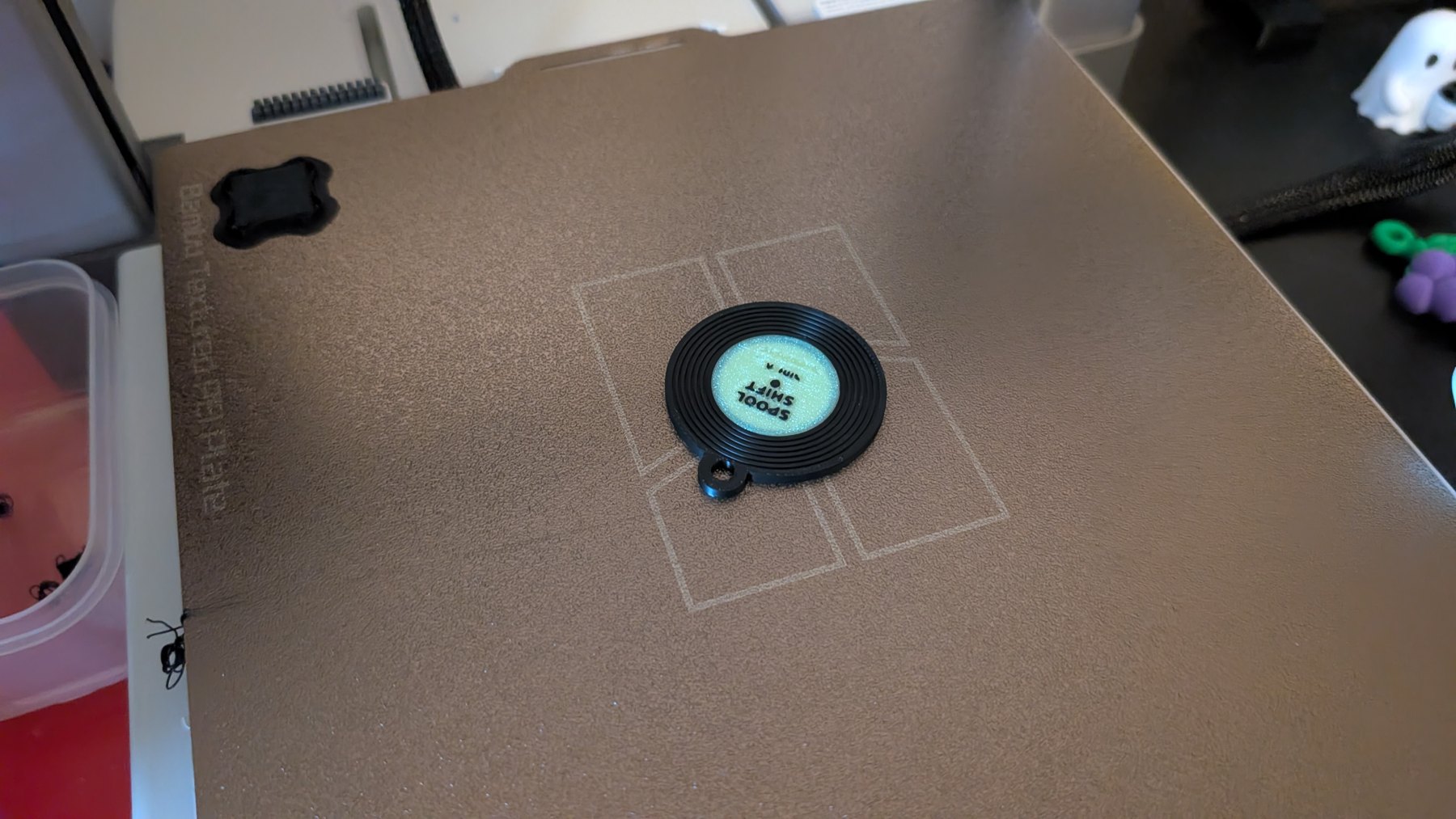
The small record-shaped keyring was an early test. The mushrooms taught us another useful lesson: keep supports out of the pocket. The tag needs that space more than the slicer’s enthusiasm does.
Each new design needs its own fit and phone-tap checks. A working Mushroom Trio does not automatically prove every future shape.
04 / ONE PRINT, ONE ADDRESS
Same model. Its own story.
Each physical print run gets a unique permanent address—even when we print the same design again. Its videos and details can be updated while the tag keeps pointing to the same page.
That lets the story grow after the last layer. The next print gets a new page, rather than borrowing the previous print’s identity.